What Is a CRM and How Does It Work?
What Is a CRM?
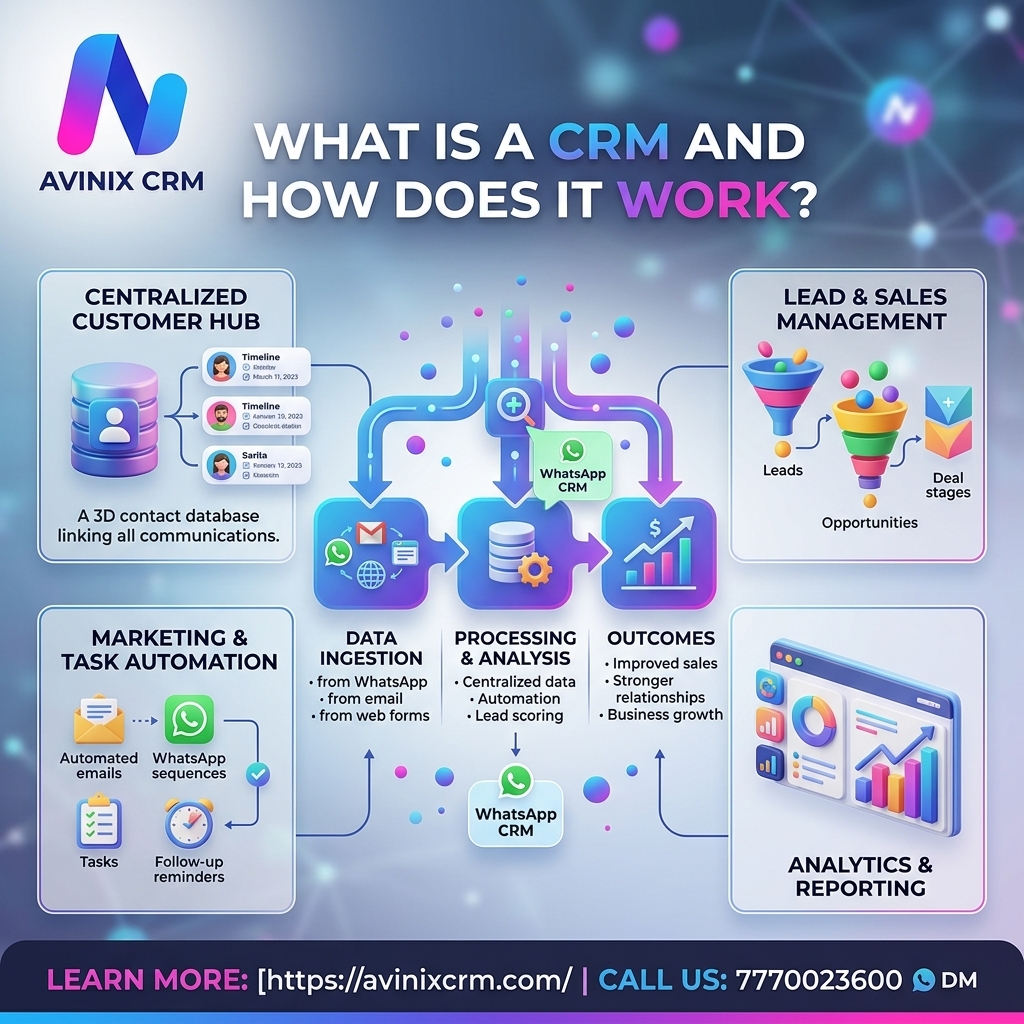
A CRM (Customer Relationship Management) system is a software solution designed to help organizations manage their interactions with current and potential customers. By integrating various functions like contact management, lead tracking, and sales automation, a CRM allows businesses to create a centralized system for customer data, making it easier to manage relationships and enhance customer service.
How Does a CRM Work?
The operation of a CRM system revolves around the following key components:
1. Data Capture
CRMs collect information from various sources such as websites, social media, and email. Businesses can use lead management systems within the CRM to gather and organize leads in one location.
2. Lead Management
Effective lead management is essential for any sales-oriented business. It enables teams to monitor and analyze leads through different stages of the sales funnel. With features such as lead scoring and tracking, your sales team can prioritize and categorize leads, ensuring that resources are allocated efficiently.
3. Sales Automation
Sales automation tools enable businesses to streamline and automate repetitive tasks, such as follow-up emails and scheduling meetings. This not only saves time but also reduces the risk of errors.
4. Customer Interaction Tracking
CRM systems maintain a detailed history of customer interactions, which includes emails, calls, meetings, and social media engagements. This continuous tracking provides insights that help sales teams tailor their communication effectively.
5. Reporting and Analytics
Most CRM platforms offer reporting tools that allow businesses to analyze data and track performance metrics like sales conversion rates and customer acquisition costs. This information is invaluable in informing strategy and improving performance.
Benefits of Using a CRM
- Improved Customer Relationships: A CRM helps businesses maintain detailed histories of customer interactions, leading to personalized experiences.
- Increased Productivity: Automation of routine tasks allows your team to focus on important sales activities.
- Better Data Management: With all customer information centralized, accessing and updating data becomes seamless.
- Enhanced Communication: Integrated tools, especially with features like WhatsApp CRM integration, facilitate more effective communication with clients.
- Sales Growth: With better insights and management, organizations can spot opportunities leading to sales growth.
Types of CRM Systems
Different types of CRM systems are available catering to varied business requirements:
1. Operational CRM
This type is focused on managing customer interactions across different channels and streamlining processes. It includes features for sales force automation, marketing automation, and service automation.
2. Analytical CRM
Analytical CRMs specialize in analyzing customer data for business intelligence. This understanding facilitates a more strategic approach to marketing and customer retention.
3. Collaborative CRM
Collaborative CRMs allow multiple departments, such as sales and support, to share customer information and insights, creating a unified approach to customer management.
Choosing the Right CRM for Your Business
When selecting a CRM system, consider the following criteria:
- Business Size: Some CRMs are better suited for small businesses, while others cater to large enterprises.
- Cost: Many CRMs offer free trials or tiered pricing plans that accommodate various budgets.
- Integrations: Ensure the CRM can integrate with other tools you already use, like email marketing systems or project management tools.
- User-Friendliness: A user-friendly interface will lead to better adoption rates among your team.
Popular CRM Tools
There is a myriad of CRM tools in the market today, including:
- Avinix CRM: An all-in-one platform with WhatsApp integration.
- Salesforce: One of the industry leaders with robust features.
- HubSpot: Known for its free tier and excellent marketing features.
- Zoho CRM: Offers a wide range of features at competitive prices.
Final Thoughts
In an era where customer experience dictates brand loyalty, a CRM system is vital for managing and optimizing customer relationships. From lead management to streamlined communication, the benefits of implementing a CRM can have a significant impact on your business operations and success.
FAQs
1. What is a CRM system?
A CRM system is a tool that helps businesses manage customer information, track interactions, and improve relationships to enhance sales and service.
2. What are the key features of CRM software?
Key features include contact management, lead tracking, sales automation, reporting & analytics, and integration with other tools.
3. How can CRM improve my sales process?
A CRM enhances sales processes by streamlining lead management, automating repetitive tasks, and providing insights for better decision-making.
4. Is there a free CRM available for small businesses?
Yes, many CRMs offer free tiers, including HubSpot and Avinix CRM, which are great for small businesses.
5. Can CRM systems integrate with messaging platforms?
Absolutely. Many CRM systems, including Avinix CRM, provide integrations with messaging platforms like WhatsApp, improving communication and efficiency.
If you're ready to enhance your customer management, call us at 7770023600 to get started with Avinix CRM!
Book a Test Drive and see how our CRM tools can transform your business communications!
Explore More about our features and how they can benefit your business!
For more details, get in touch with us at 7770023600.